What Does a Funeral Celebrant Actually Do?
When someone dies, families are often faced with a long list of decisions at a time when they may feel overwhelmed. One of those decisions is whether to have a funeral celebrant.
Many people have heard the term, but may not be sure what a celebrant actually does. Is their role simply to speak at the funeral? Do they organise the service? Can they help with the ceremony if the family is not religious?
The short answer is yes, a funeral celebrant can help guide a family through the ceremony itself but their role can be so much more than simply standing at the front and speaking.
What is a funeral celebrant?
A funeral celebrant is someone who creates and conducts funeral or memorial ceremonies for families.
Unlike a religious minister or faith leader, a celebrant does not necessarily follow a particular religious tradition. This can give families considerable flexibility in how they choose to remember someone.
A ceremony can be traditional, informal, reflective, humorous, spiritual or completely secular. It can include readings, music, stories, photographs, poems, rituals and personal tributes.
The focus is on the individual who has died and the people who knew them.
The first conversation
One of the most important things a celebrant does happens before the funeral.
They spend time with the family, usually having a detailed conversation about the person who has died.
This may involve talking about their childhood, family, work, friendships, interests, personality and important life experiences. A celebrant may ask about the person's sense of humour, the things they loved, the places they visited or the small habits that made them recognisable to those closest to them.
These conversations are not just about collecting facts.
They help the celebrant understand who the person really was.
Families sometimes begin by saying, "We don't know what to say." As the conversation develops, memories often emerge naturally. A story about a holiday can lead to a story about a friendship. A favourite song can bring back a particular moment. A seemingly ordinary detail can become one of the most meaningful parts of the ceremony.
Writing the ceremony
Once the celebrant has listened to the family, they shape those memories into a ceremony.
This usually includes an opening, a welcome, a reflection on the person's life, tributes or readings, music and a photo tribute. The exact structure depends on the family's wishes.
Helping families tell the story
A person's life cannot be reduced to a list of dates and achievements.
A celebrant helps turn those details into a story.
They might talk about the person's early years, the relationships that shaped them, their work and passions. They may also include the quirks and imperfections that made the person human.
Sometimes the most powerful memories are the little moments. They might be the way someone always answered the phone, the meal they cooked for everyone on Sunday, their habit of telling the same joke or the particular way they cared for their family.
These details can make a ceremony feel personal.

Supporting people who want to speak
Many families want relatives or friends to give a eulogy or tribute but feel nervous about speaking in front of others.
A celebrant can help with this.
They may suggest what could be included, help organise ideas or talk through the structure of a tribute. They can also introduce speakers during the ceremony and provide gentle guidance if someone becomes emotional.
There is no expectation that a speaker should deliver a perfect speech.
Funerals are emotional occasions. Tears, pauses and moments when words become difficult are completely understandable.
The celebrant's presence can provide reassurance that someone is there to guide the ceremony if this happens and step in if needed.
Choosing music, readings and rituals
Music can be an important part of saying goodbye.
A favourite song can bring back memories immediately. A particular piece of music may reflect someone's personality, culture or beliefs. Families might choose songs that were meaningful to the person or simply music that feels appropriate to the moment.
Readings and poems can also provide words when family members are struggling to find their own.
Some families include rituals such as lighting a candle, placing flowers, sharing photographs or inviting people to participate in a symbolic farewell.
A celebrant can help families consider these possibilities without making the ceremony feel overly complicated.
What a celebrant does not do
It is also useful to understand the limits of the role.
A celebrant does not replace every other professional involved in arranging a funeral. Funeral directors generally manage practical aspects such as transportation, paperwork, facilities and coordination with the relevant services.
The celebrant's primary focus is the ceremony and the family's experience of creating it.
The exact responsibilities can vary between celebrants, so families should always ask what is included when making arrangements.
Can a celebrant conduct a religious funeral?
A celebrant can work with families from many different backgrounds, but the approach depends on the person's wishes and the celebrant's experience.
Some families want a completely secular ceremony. Others want elements of their faith or cultural traditions included.
A celebrant can discuss what matters to the family and help incorporate appropriate elements where possible. If a family wants a ceremony led according to a specific religious tradition, they may instead choose to involve a minister, priest, rabbi, imam or another faith leader.
There is no single format that suits every family.
Why personalisation matters
The value of a celebrant often becomes clearest when a family wants something personal.
A ceremony does not have to be formal simply because it is a funeral.
It can include laughter as well as tears. It can acknowledge complicated relationships. It can celebrate someone's achievements while also remembering their everyday personality.
A well-written ceremony allows people to recognise the person being remembered.
It might make someone smile because the celebrant has captured a familiar expression. It might prompt a memory that had not been discussed before. It might give a family a moment to acknowledge something they found difficult to put into words themselves.
Choosing the right celebrant
Finding the right celebrant is ultimately about trust.
Families should look for someone who listens carefully, communicates clearly and is willing to understand the individual rather than relying on a standard script.
It can be helpful to ask how the celebrant prepares a ceremony, how much time they spend with families, whether they write the ceremony themselves and what support they provide for speakers and other participants.
Most importantly, families should feel comfortable talking openly with them.
A funeral celebrant is entrusted with some of the most personal stories a family will ever share. The right person understands that responsibility.
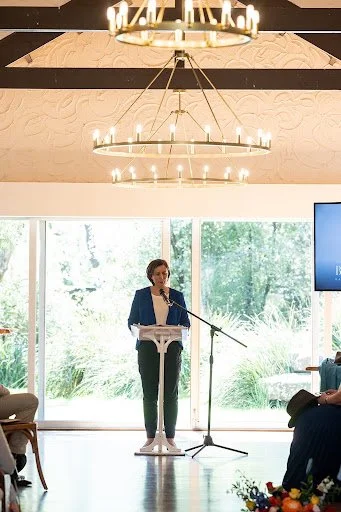
A meaningful role at an important time
A funeral celebrant's role goes far beyond standing at the front of a room and reading words.
They listen. They ask questions. They gather memories. They write. They coordinate the ceremony with the family and help create a structure for saying goodbye.
At a time when emotions can make even simple decisions difficult, having someone guide the ceremony can provide a sense of calm.
Ultimately, the purpose of a funeral celebrant is to help families tell the story of a life and create space for a meaningful farewell.
There is no perfect funeral, just as there is no single way to grieve. The most meaningful ceremonies are often those that feel honest, personal and unmistakably connected to the person being remembered.